It is tempting to save money by using consumer-grade computers for digital signage — a cheap mini PC or streaming stick costs a fraction of commercial hardware up front. But signage is one of the clearest cases where the cheapest option costs the most over time. Here is the honest engineering reality, from a manufacturer that builds both kinds of hardware.
The core difference: duty cycle
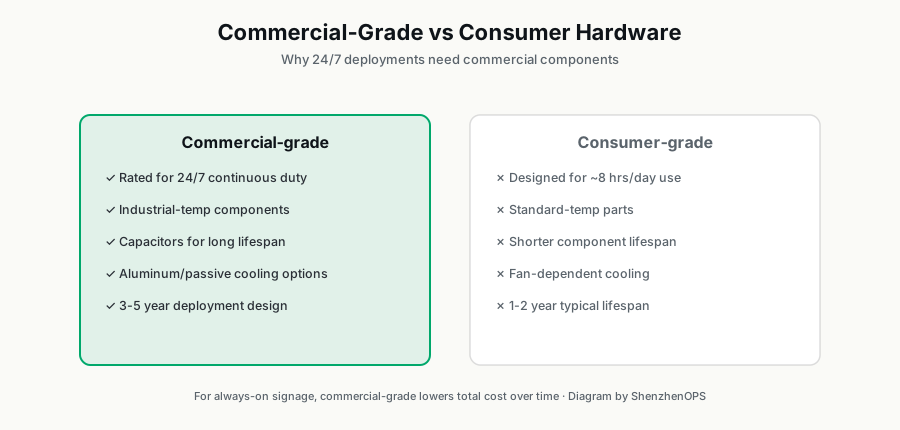
Consumer hardware is designed around a typical-use assumption: maybe 8 hours a day, with rest periods. Commercial-grade hardware is rated for continuous 24/7 duty. That single difference cascades into component choices — capacitors, cooling, memory, and storage all selected for sustained operation rather than intermittent home use.
Where the differences actually live
- Capacitors and power delivery: Commercial boards use longer-life components rated for continuous thermal stress. Consumer capacitors degrade faster under always-on heat.
- Thermal design: Signage often sits in enclosed display bays, warm windows, or non-air-conditioned spaces. Commercial designs (including fanless aluminum options) handle sustained heat; consumer fans clog and fail.
- Component grade: Industrial-temperature-rated parts tolerate the real conditions signage lives in.
- Lifespan target: Commercial hardware is engineered for 3-5 year deployments; consumer gear is typically a 1-2 year proposition under continuous load.
When consumer-grade is genuinely fine
To be fair: not every screen needs commercial hardware. A display in a climate-controlled office that runs during business hours, shows simple content, and gets refreshed every few years can run on consumer-grade hardware without issue. The key is matching the spec honestly to the duty — neither overspending on a low-stakes screen nor underspending on an always-on, customer-facing one.
How to tell what you are actually buying
- Ask for the operating-hours rating (24/7 vs intermittent) in writing.
- Ask about operating temperature range — not just a single number.
- Ask about expected service life and warranty terms under continuous use.
- For warm or enclosed locations, ask about fanless or enhanced cooling options.
We build both consumer-tier and commercial-grade hardware, and we will tell you honestly which your deployment needs — there is no value in selling you commercial spec for a screen that does not need it, or in shipping consumer parts into a 24/7 role they will not survive.