Quick-service restaurants run some of the most demanding digital signage there is. Menu boards display all day, drive purchasing decisions in real time, and span multiple synchronized screens per location across hundreds or thousands of sites. McDonald's alone runs more than 70,000 digital menu boards. Get the hardware right and they just work; get it wrong and you have frozen menus at the lunch rush. Here is what matters.
Why QSR is harder than it looks
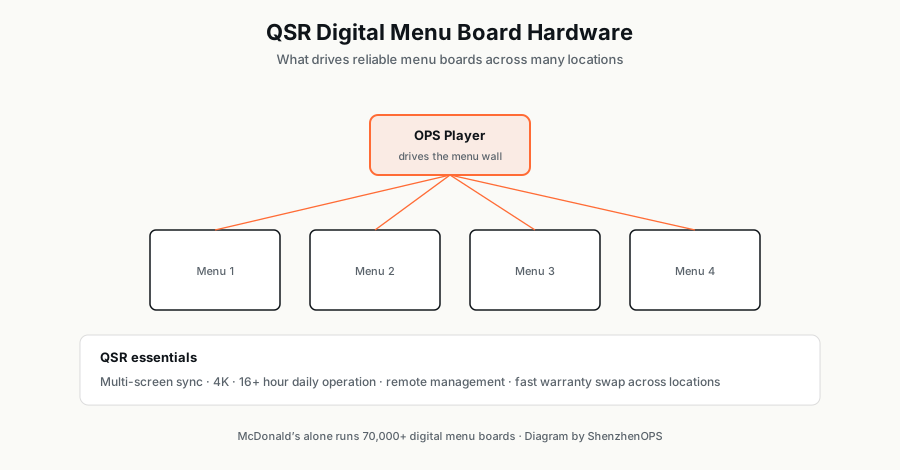
A menu board is not a single screen showing a loop. It is usually a wall of synchronized panels that must update together — change a price or a daypart, and every screen flips in unison. That synchronization, at 4K, for 16+ hours a day, across a large estate, is a real hardware requirement, not a nice-to-have.
The core requirements
- Multi-screen sync: One player driving several outputs in perfect lockstep, or networked players that stay aligned. Tearing or drift between panels looks broken to customers.
- 4K output: Menu typography and food imagery need to be crisp. 1080p stretched across a large wall looks dated.
- Long daily duty: 16-24 hours, every day. This is commercial-grade territory — consumer hardware will not last.
- Dayparting reliability: Breakfast-to-lunch-to-dinner menu switches must fire on schedule without manual intervention.
- Remote management: Across hundreds of locations, you manage centrally or not at all.
- Fast warranty swap: When a unit fails, a franchise needs a quick, identical replacement — standardized hardware and clear RMA terms matter.
Why OPS suits menu boards
OPS modules fit QSR well: a single capable module can drive a multi-screen menu wall, it slides into the display for a clean install with no exposed box, and a failed unit swaps out in seconds without dismounting screens — minimal disruption during operating hours. A mid-tier i5 handles most menu walls; i7 for larger or more graphics-heavy installations.
We supply standardized OPS configurations built for continuous menu-board duty, with the consistency multi-site brands need. If you are equipping or refreshing QSR menu boards, we can spec a configuration that holds up to the daily grind.