Retail is the single largest market for digital signage — over 21% of the total, and one of the fastest-growing verticals. But a retail store is not one environment; it is several, and each zone has different hardware needs. Speccing the same player everywhere either overspends in some places or underpowers others. Here is how a manufacturer thinks about retail signage hardware, zone by zone.
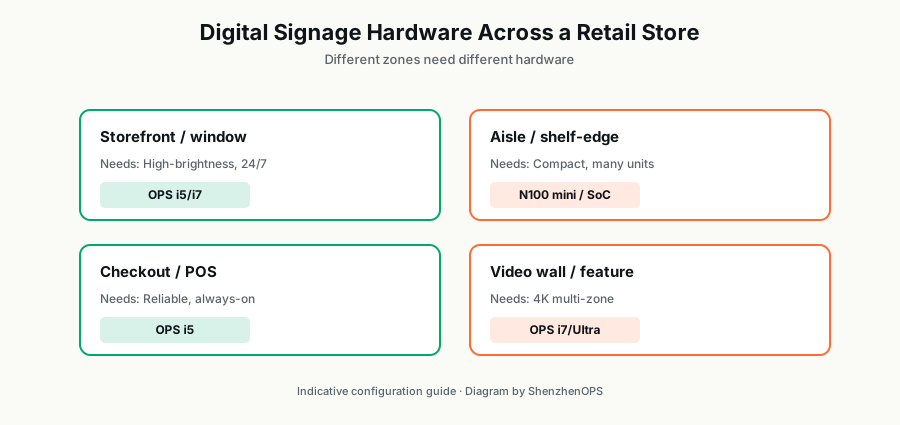
Storefront and windows
These run long hours, face sunlight, and are your first impression. They need high-brightness displays and players that sustain performance without throttling in a warm window. A mid-tier OPS module (i5 or i7) driving a commercial high-bright display is the typical fit. This is not the place to cut corners.
Aisle and shelf-edge
Here you have many small screens showing prices, promotions, and simple video. The priority is unit cost and manageability across dozens or hundreds of points. Entry-tier N100 mini PCs or SoC displays make sense — modest power, low cost, easy to deploy in volume.
Checkout and POS
Always-on, customer-facing, and tied to transactions — reliability is the priority. A dependable mid-tier OPS module that runs all day without intervention is worth the spend, because downtime here directly touches sales.
Video walls and feature displays
The showpiece. 4K, often multi-zone or synchronized across panels, sometimes interactive. This demands the most processing power — an i7 or Core Ultra OPS module — to drive high resolution smoothly without stutter.
Cross-cutting requirements
- Remote management across the fleet — essential once you pass a handful of screens.
- Consistent configuration so spares are interchangeable and support is simple.
- Commercial-grade build for the long-hours zones, to avoid the false economy of consumer hardware.
- Easy servicing — OPS modules swap in seconds, minimizing store disruption.
We supply the full range — entry N100 through Core Ultra OPS — so a retailer can standardize zones on the right tier from one source. If you are rolling out or refreshing store signage, we can map hardware to your store layout.